
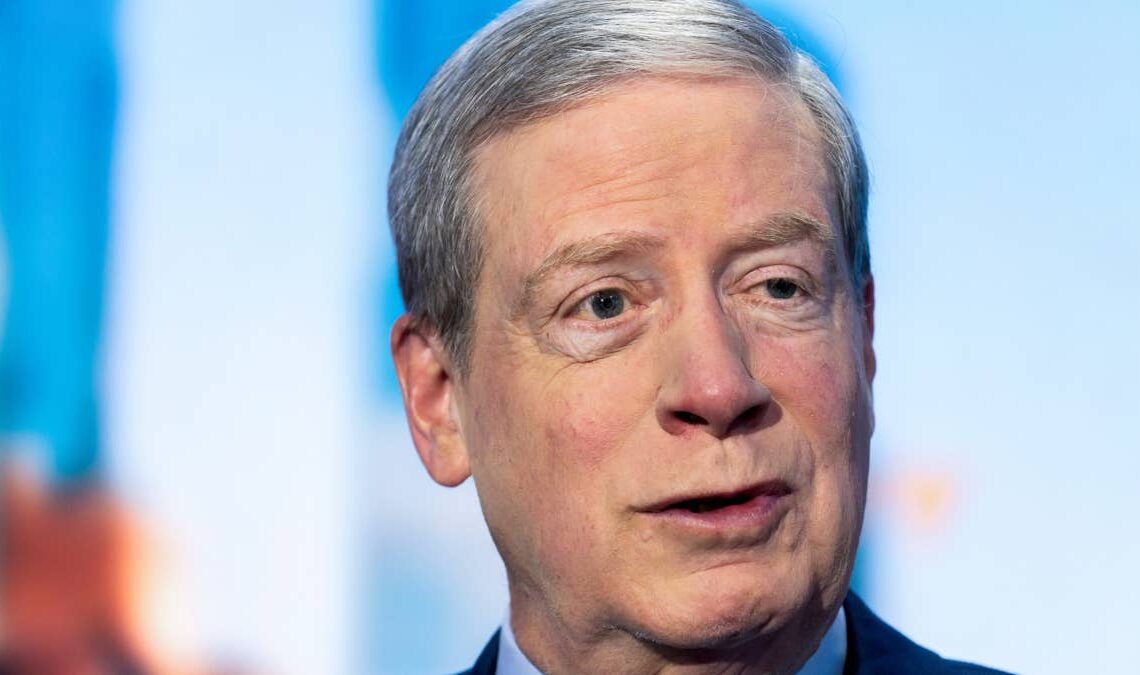
Treasury Secretary Scott Bessent is defending the Trump administration’s intervention in the bond market, pushing back against criticism from his former investing mentor, billionaire Stanley Druckenmiller.
Druckenmiller called Treasury’s decision to expand its government debt buybacks a “mistake” in the Wall Street Journal last week. The criticism came as long-term Treasury yields climbed to their highest levels in years, putting more pressure on the government’s borrowing costs.
“Stan’s a great investor, but what I would point out is that, again, the U.S. bond market has been the best performing market since the president came in,” Bessent said on Monday at the G20 finance ministers meeting, CNBC reported.
Bessent said he has spoken with Druckenmiller since the op-ed was published and that the conversation went “fine.”
Also Read: Scott Bessent has surprising answer for U.S. debt fears
But he also took a jab at his former mentor.
“Stan’s a great investor. He changes his mind a lot, and he doesn’t like losing money,” Bessent said. “I think he lost money the day he sent in the editorial.”
The clash comes as bond yields are moving higher again. The benchmark 10-year Treasury yield topped 4.75% Monday, its highest level since January 2025, as high energy prices added to inflation concerns and expectations for another Federal Reserve rate hike.
Fed Chair Kevin Warsh also signaled in his recent Jackson Hole speech that interest rates may need to rise again as inflation remains above the central bank’s 2% target.
Bloomberg / Getty Images
Why Druckenmiller opposes Bessent’s move
Treasury recently more than doubled the size of its buybacks of longer-term government debt, with Bessent saying in August that purchases could exceed $4 billion per operation.
Bond buybacks allow the Treasury to repurchase older securities that can be harder to trade. They are designed to improve liquidity and keep trading orderly, rather than pay down the national debt.
Druckenmiller argues Treasury should stay out of the way and allow the bond market to reflect investors’ concerns about inflation, deficits, and federal debt.
“You can’t buy your way out of a solvency conversation with liquidity tools. You can only postpone the conversation and raise the eventual price,” Druckenmiller wrote in the Journal.
Bessent sees the situation differently.
Related: Billionaire Druckenmiller makes cancer stock his #1 buy for a reason
He noted that Treasury yields have been roughly flat since President Trump took office and argued that U.S. government bonds have performed better than other major sovereign debt markets.
“My job is to make sure that the market is looking at fundamentals and that the market does not dictate policy,” Bessent said.
“Hedge fund managers like to speed things up,” he added.
Bessent has also rejected the idea that Treasury can simply force borrowing costs lower. In an earlier interview, he said his job was to keep the market from becoming disorderly rather than determine where bonds should trade.
U.S. debt now tops $40 trillion
Gross federal debt recently crossed $40 trillion, more than double its level a decade ago. About $32 trillion is held by the public, including investors, banks, pension funds, the Federal Reserve, and foreign governments.
Higher Treasury yields increase the cost of refinancing that debt.
The Congressional Budget Office projects a federal budget deficit of roughly $1.9 trillion this year, growing to $3.1 trillion by 2036.
For investors, rising yields can reach well beyond the bond market. They can raise borrowing costs for companies and consumers, while higher Treasury returns give investors a more attractive alternative to stocks.
Still, Bessent’s buybacks don’t remove risks. Inflation, Fed policy, and Washington’s borrowing needs will continue to influence where Treasury yields trade.
Druckenmiller reshuffles his stock portfolio
Druckenmiller made some big changes to his investments through his Duquesne Family Office during the second quarter.
In its latest 13F filing, Duquesne increased its Amazon (AMZN) stake by more than 1,000% to 541,600 shares and more than doubled its call options on the stock. The firm also opened a new position in Alphabet (GOOGL) with 336,300 shares and added call options on Meta (META) and Tesla (TSLA), according to data from Whalewisdom.
Related: Cathie Wood buys $53 million of popular semiconductor stock
Druckenmiller also made several changes to his semiconductor bets. Duquesne sold its entire stakes in Broadcom (AVGO), Intel (INTC) and Micron (MU), while opening a new 72,900-share position in AMD (AMD) and slightly increasing its Taiwan Semiconductor (TSM) holding.
Outside Big Tech, Duquesne bought 603,000 shares of Delta Air Lines (DAL) and nearly tripled its United Airlines (UAL) stake to about 795,000 shares.
Druckenmiller also added several data-center and crypto-mining stocks, including more than 4 million shares of Bitdeer Technologies (BTDR) and 754,800 shares of Riot Platforms (RIOT). Meanwhile, he exited Cloudflare (NET) and MercadoLibre (MELI) and cut his stakes in Alcoa (AA) and Arm Holdings (ARM) by more than 70%.
Related: Mexican restaurant chain closes all locations in major market