
Why Are Police Investigating Reform UK Donations?
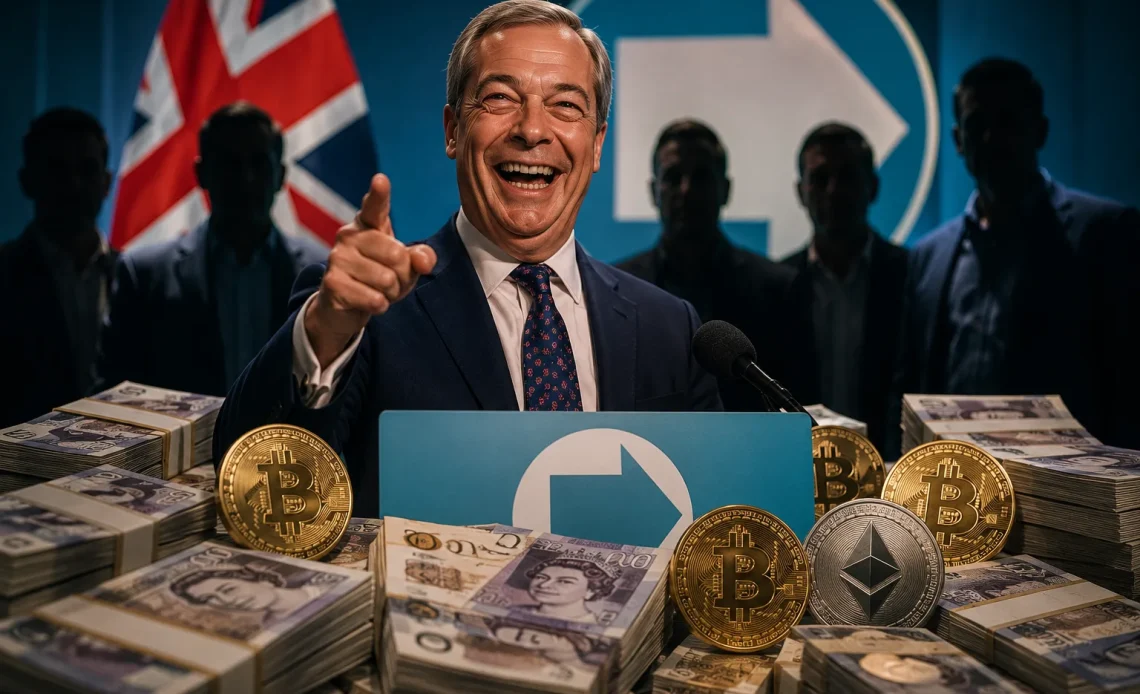
British police are investigating at least £500,000 in donations to Nigel Farage’s Reform UK party, placing the populist party’s funding under renewed scrutiny after weeks of questions over its financial affairs.
The investigation centers on donations reportedly made before the 2024 UK general election by the mother of George Cottrell, a close political ally of Farage who was convicted of wire fraud in the United States. Cottrell went to prison in 2017 after pleading guilty and now works in cryptocurrency.
London’s Metropolitan Police said the investigation relates to potential offences under laws governing political party donations. Those offences could include concealing the source of funding or giving false information to a party treasurer.
“An investigation was launched in February 2025 after a referral was made to the Metropolitan Police by the Electoral Commission relating to donations made to a political party ahead of the 2024 UK General Election,” a spokesperson for the force said.
Police said two people have been questioned, but no arrests have been made. They did not confirm the names of those involved in the donations being examined.
Why Does The Funding Question Matter Politically?
The investigation comes at a sensitive moment for Farage and Reform UK. The party has been trying to convert its anti-establishment support into a more durable national political force, but questions over funding risk weakening one of its central messages: that it operates outside the old party system.
Farage has already faced scrutiny over undisclosed gifts from a cryptocurrency billionaire investor and from Cottrell, a long-standing political ally. He has repeatedly denied wrongdoing, saying he received the donation from the billionaire crypto investor before announcing his candidacy in the 2024 election and therefore did not need to declare it.
Richard Tice, Reform’s deputy leader, rejected the framing of the police investigation, telling local radio it was part of a “politically motivated smear campaign.”
The party did not immediately respond to a request for comment. Cottrell also did not immediately respond to a request for comment left with a company where he is listed as a director.
Investor Takeaway
The investigation adds political risk around Reform UK at a time when British markets are watching the party’s influence on fiscal, immigration, tax, and regulatory debates. Even without charges, funding scrutiny can affect polling momentum, donor confidence, and the party’s ability to shape policy narratives.
How Is Farage Responding To The Pressure?
Farage has moved to turn the funding questions into a direct political test. Earlier this week, he abruptly announced that he would resign his parliamentary seat and run there again, seeking a vote of confidence from voters in response to criticism about his finances.
The move is high-risk. A by-election-style contest could allow Farage to frame the issue as a fight between voters and political institutions. But it also gives opponents a focused campaign around transparency, donor influence, and the financial networks around Reform UK.
The timing is difficult for Reform. A poll by political consultancy Electoral Calculus this week said the party had slipped from first to third in voting intentions, behind the governing Labour Party and the opposition Conservatives.
That shift matters because Reform’s recent rise has depended heavily on momentum. Funding allegations, police scrutiny, and a contested seat campaign could slow that momentum if voters begin to see the party as exposed to the same financial questions it often directs at larger rivals.
What Are The Market Implications?
For investors, the immediate market impact is limited. Reform UK is not in government, and the investigation does not directly change fiscal or monetary policy. The wider significance lies in political risk and the direction of UK policy debate before the next major electoral cycle.
Reform has helped pull British politics toward sharper positions on immigration, taxation, public spending, energy policy, and financial regulation. If the party weakens in the polls, Labour and the Conservatives may face less pressure to respond to its agenda. If Farage survives the scrutiny and wins a fresh mandate from voters, the party could regain momentum and continue shaping policy debates from outside government.
The investigation also highlights how crypto-linked wealth and political finance are becoming harder to separate. Cottrell’s current cryptocurrency work and Farage’s previous questions over gifts from a crypto investor place the issue inside a broader debate over donor transparency, digital asset wealth, and political influence.
The police probe is still at an early stage, and no arrests have been made. But the political effect is already visible. Reform UK now faces a test of whether its outsider brand can withstand the same funding scrutiny that has damaged more established parties.