
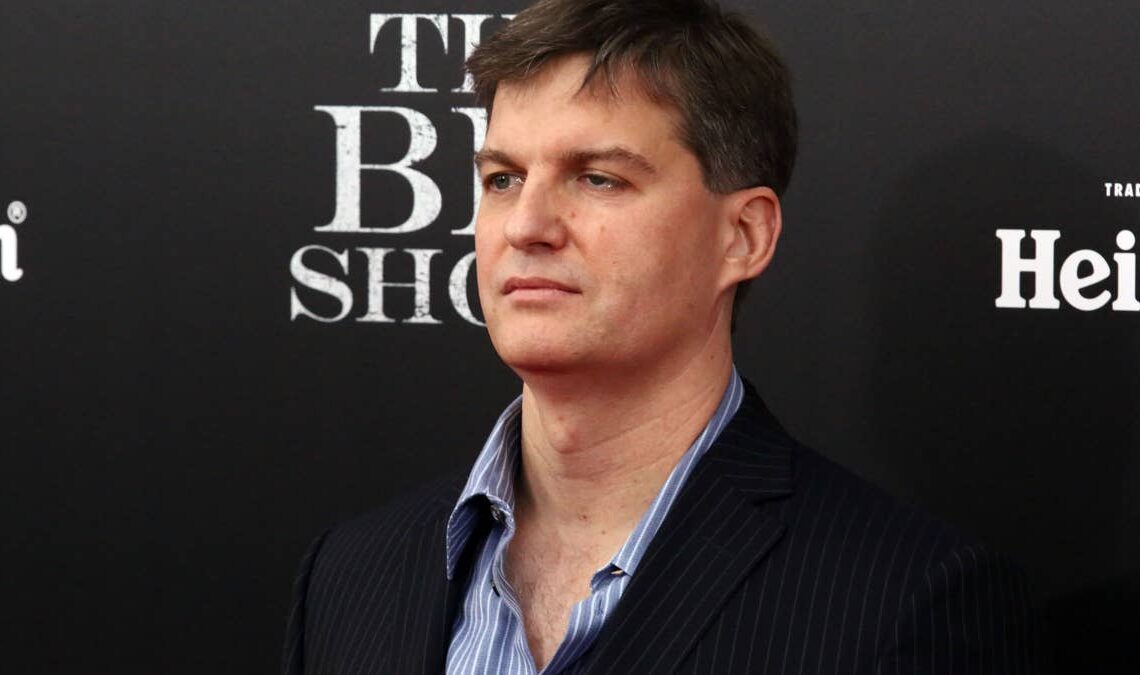
Michael Burry just took another dig at Nvidia (NVDA), questioning the confidence in the AI chip giant amid a series of media appearances from CEO Jensen Huang.
In a Substack exchange late Monday, Sept. 28, the bearish investor compared Huang’s growing media presence with that of Palantir (PLTR) CEO Alex Karp. On top of that, he weighed in on criticism of buying back shares at elevated valuations.
In recent weeks, Palantir CEO Karp has criticized frontier AI companies, arguing that businesses risk paying for expensive AI services while handing over proprietary data and expertise that make those systems valuable.
“They are paying for tokens that create no value,” Karp said in a recent CNBC interview, arguing that customers increasingly want control over “their compute, their models, their data stack and their alpha.”
The timing of those scathing remarks carries extra weight.
Nvidia just approved another $150 billion in share buybacks, a major show of confidence as investors debate how the AI spending boom can last.
Nevertheless, Burry holds Nvidia put options, giving him a financial stake in a decline. His latest comments offer another glimpse into why he remains unconvinced by the AI rally.
Michael Burry questions Nvidia’s $150 billion move
Burry’s latest criticism of Nvidia puts Jensen Huang’s public appearances and the company’s cash decisions under scrutiny.
About Huang’s media blitz, Burry said: “He’s becoming a bit like Karp in that way,” referring to Karp’s frequent television appearances.
More Manager Buy/Sells:
- Michael Burry increases his bet against popular chip giant
- Warren Buffett reveals he broke his own investing pattern
- Mark Cuban bets on MLB with Athletics minority stake
The comparison comes as investors debate Nvidia’s lofty valuation and circular financing, in which investments in AI companies can help fund purchases by their backers.
The stock is trading at around 25 times non-GAAP earnings, virtually in line with the sector median, based on Seeking Alpha data. Nvidia’s stock price has become a lot more palatable after its choppy trading this year.
Still, the stock is up about 37% over the past six months, beating the S&P 500’s 21% gain over the same period, Seeking Alpha data confirmed.
Then there’s the buyback.
Nvidia approved another $150 billion in repurchases on Sept. 28, lifting its remaining authorization to $235 billion, with execution expected through fiscal 2028. That follows May’s $80 billion authorization and $39.8 billion in actual repurchases during fiscal 2027’s first half.
When a user questioned buying expensive shares instead of preserving cash, Burry replied, “Yes, that is more common overseas now than in the US, where share buybacks at all levels seem to be the rule.”
It’s also important to understand that his skepticism carries financial stakes.
Burry recently closed outright shorts in Nvidia, Palantir, Micron (MU), Nebius (NBIS), and other AI stocks, replacing many with puts extending into 2027.
Astrid Stawiarz / Getty Images
Burry raises the stakes on his AI bubble bet
Meanwhile, as reported by Seeking Alpha, Burry is seeking more leverage against AI stocks, saying fresh research suggests the bubble could burst “sooner than later.”
“Fundamentally, I am moving timelines up,” he wrote, explaining his shift from stock shorts into put options, many extending into 2027.
He covered shorts in Nvidia, Palantir, Micron, Nebius, Caterpillar (CAT), CoreWeave (CRWV), and the iShares Semiconductor ETF, replacing most with puts. Oracle’s (ORCL) short became December 2027, while MetLife became another bearish options position.
CoreWeave was the exception, as Burry hadn’t found attractively priced puts. Tax-loss harvesting explained some of the repositioning, but research drove most of it.
Meanwhile, Anthropic’s reported IPO disclosures sharpened the debate over AI economics.
The company could seek a valuation above $2 trillion despite reporting nearly $4.6 billion in revenue in 2025, an operating loss exceeding $8 billion, and a net loss of roughly $42 billion, according to CNBC.
That last figure needs context. About $34 billion reflected an accounting charge tied to financing instruments, rather than cash operating expenses.
Still, Anthropic spent $7.33 billion on compute and infrastructure and disclosed $518 billion in future infrastructure commitments, as reported by Reuters.
Two customers supplied nearly one-quarter of sales.
Separately, Burry called AI executives’ appeals to slow development “self-serving,” following Anthropic CEO Dario Amodei’s push for a slower rollout over safety concerns.
Nvidia investors need proof beyond the buyback
For Nvidia shareholders, the debate now centers on whether customers can generate sufficient cash from AI to sustain their spending.
That is the test behind the headlines.
It’s important to monitor whether chip demand translates into stronger customer sales, improved margins, and reduced dependence on outside financing. Infrastructure commitments show ambition, but they do not guarantee profitable demand.
Nvidia’s buyback deserves scrutiny, too. A $235 billion authorization creates room for repurchases; it does not mean that money has already been spent. Track actual purchases, the prices paid, and whether the share count falls after employee stock compensation.
Burry’s options shift also need perspective.
It signals stronger bearish conviction and a desire for leverage, but it does not establish when a downturn will arrive. Even a correct thesis can lose money if options expire before the expected decline.
For investors reviewing exposure, the useful exercise is to stress-test earnings expectations against slower AI spending and a lower valuation multiple.
Related: Bank of America has a blunt message for S&P 500 investors