
The Federal Reserve delivered the quarter-point interest rate hike Wall Street expected Sept. 17.
The big surprise was what came next: Fed policymakers signaled that another rate hike could be coming before the end of the year and potentially more if stubborn inflation refuses to ease.
The reason? Central bank officials are struggling to get stubborn inflation back to its 2% target, a mission that it has yet to accomplish in over five years.
The unanimous 12-0 Federal Open Market Committee decision lifts the Fed’s benchmark Federal Funds Rate to a range of 3.75% to 4%.
It marked a renewed push to tighten monetary policy following persistent price pressures fueled by rising energy costs from the Iran War and related economic geopolitical shocks.
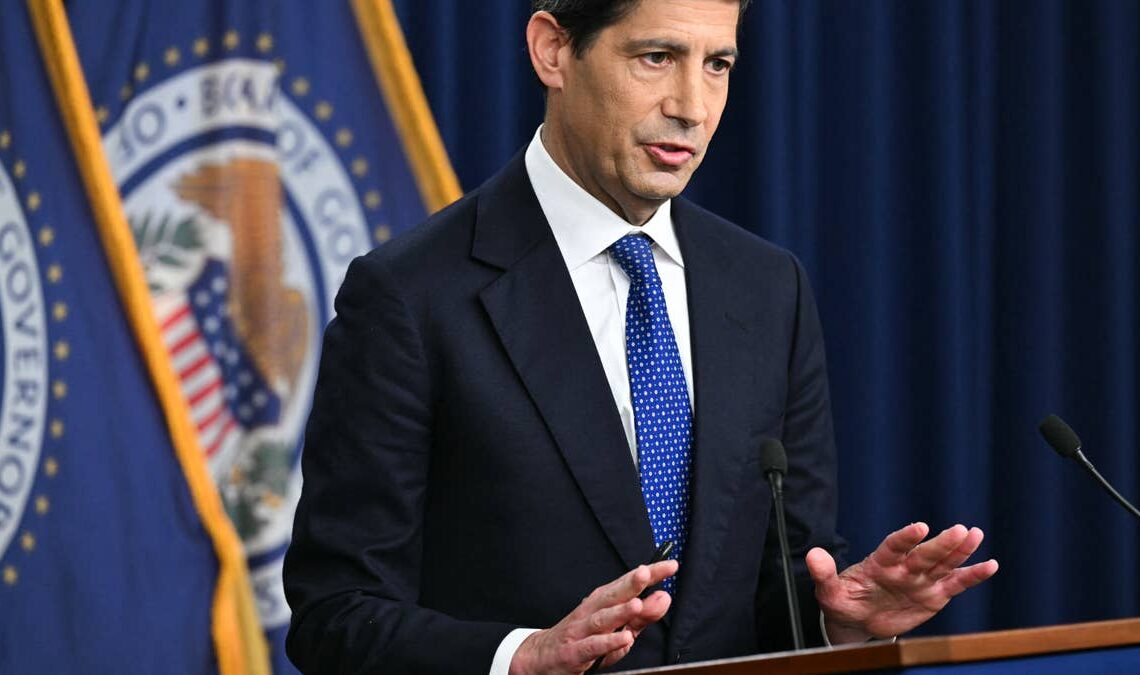
“Price stability is foundational to economic growth, and I think we took an important step today to deliver it,’’ Fed Chairman Kevin Warsh said in an abbreviated press conference following the statement release.
The Fed’s interest-rate hike sends ripples through the entire financial system with the most immediate pressure hitting short-term borrowing such as variable-rate credit cards and student loans.
Indirectly, it impacts fixed-rate mortgage rates which rely on Treasury yields plus corporate debt and capital investment.
Higher yields across the Treasury curve significantly boost net interest payments to the U.S. gross national debt of $40.1 trillion.
By the way, the White House and the markets are not pleased with the Fed’s rate hike decision or the signal of at least one additional hike.
Dot plot signals another rate hike this year
The quarterly dot plot forecast, or Summary of Economic Projections, also released Sept. 16 showed that 16 out of 18 participating policymakers anticipate at least one additional rate increase before the end of the year.
SimCorp Global Head of Investment Decision Research Melissa Brown said if oil prices continue to be not only high but also volatile, the Fed will likely have no choice but to raise rates again.
“With the dot plot forecasting one more hike this year, the Fed is acknowledging that they need to act, even if they have little effective control over the supply-side nature of rising inflation. However, in this case “The Fed” is not synonymous with Warsh, as he still refused to make any kind of projection, dot or otherwise,’’ Brown told TheStreet in an email.
Rex Financial Managing Director Bill Birmingham agreed that Warsh is not signalling what path the central bank will take but added that it also seems policymakers “may not be an aggressive enough chorus in the Fed theater for the market’s liking.”
“I think people felt there were more silent hawks in the Fed and while this is a hike, it feels more tentative overall than many would like,’’ he told TheStreet in an email.
“The date to reach target inflation of 2% core was pushed out to 2029,’’ Birmingham said. “The fact that they are acknowledging that the battle to deliver their mandate will take longer than expected is sobering news, even if it’s just an early estimate.’’
SAUL LOEB / Getty Images
Warsh’s more hawkish outlook for rates
In the weeks since the July FOMC meeting, which voted 9-3 to hold rates steady, Warsh said summer trends showed “too many categories” posting price increases above 3% over six months and 12 months, thus showing underlying inflation isn’t moving toward the central bank’s objective.
“The plain fact is inflation is too high,’’ Warsh said, adding that most global economies are facing price pressures.
He noted that labor risks remain stable.
“We cannot affect any individual price,” Warsh said, using groceries and oil as examples.
“But what we can do and will do is ensure that any change in relative prices don’t broaden out, don’t have second- and third-order effects on the economy,” he said. “That’s what we’re tasked to do, and that’s what we do.”
Traders expect a second rate hike by December
Following the Fed’s first rate hike since 2023, the CME Group FedWatch Tool priced the odds of an October rate hike at approximately 50-50 and an 88.5% likelihood of another 25 basis-point-hike by December.
Traders raised expectations of a September rate hike to over 90%after the August CPI report showed headline CPI up 0.4% month over month, 3.4% year over year, and 0.3% month over month for core CPI.
Trump repeats demands for lower rates
President Donald Trump blasted the Fed rate hike in a TruthSocial post but carefully avoided attacking Warsh, his handpicked Fed Chairman.
Jerome Powell, Warsh’s predecessor, was repeatedly attacked verbally personally and professionally by the president and his allies for not lowering interest rates to 1% or lower. Trump unsuccessfully tried to fire Powell, a move the Supreme Court quashed.
Related: Goldman flips on Fed rate hike, then backtracks on forecast
After the Sept. 16 Fed rate hike, Trump wrote:
“Interest Rates in the United States should be 1%, or less, because we are the Best Credit in the World — BY FAR. Our Country is BOOMING with new Investment! If we stopped Trading with every country that we have a Deficit with, which is most of them, we would make, at least, 1.5 Trillion Dollars a year…LOWER THE INTEREST RATES FOR THE UNITED STATES OF AMERICA, AND FAST!”
Warsh, for his part, repeatedly deflected questions about Trump and their possible communications during the post-FOMC press conference.
Treasuries respond to Fed rate hike
Following the Fed’s rate hike decision:
- The two-year Treasury yield rose to approximately 4.72%-4.74%, up around 6 or 7 basis points and reflected heightened policy sensitivity following the rate increase.
- The 10-year Treasury yield hovered around 5.00%, dipping after Warsh’s remarks and remaining near multi-year high levels.
Bond traders “shared our view that rates were too low given core PCE and the relief at seeing some action towards that end showed in the initial reaction function. This was long overdue,’’ Birmingham said.
But, he added, “the market then paired the drop post-press conference signaling that traders may not fully believe Warsh that the path to 2% core inflation can be achieved with just two hikes.”
Markets react to future Fed rate hike
As my colleague Charley Blaine noted, stocks reacted badly to the rate increase and, probably, to the prospect of more rate increases ahead.
The Standard & Poor’s 500 Index dropped as many as 78 points to about 7,500 before bouncing back to 7,551.81.
The Dow Industrials fell more than 800 points before ending at 51,461.90.
The Nasdaq Composite Index fell a modest 3 points to 25,979 before ending up at 25,978.42; it had been up as many as 243 points before the Fed meeting.
Related: Bessent is doubling down with weekly bank sanctions