
Why Does CoinMENA’s Banking Deal Matter?
Crypto exchange CoinMENA has entered a banking agreement with Standard Chartered to strengthen fiat payment infrastructure for customers in the United Arab Emirates, adding another sign that regulated banking access is becoming a key competitive issue for digital asset firms in the country.
Under the agreement, CoinMENA will use Standard Chartered to support fiat on- and off-ramps, client money accounts, and virtual account-based transaction management. The exchange said the arrangement would improve transparency and liquidity settlement with approved global counterparties.
The deal matters because fiat access remains one of the most important operational constraints for crypto exchanges. Customers may trade digital assets on-chain, but exchanges still need reliable banking partners to move local currency, manage client funds, settle transactions, and support institutional counterparties. In markets where regulation is becoming more formal, banking relationships can separate licensed operators from firms that rely on less stable payment channels.
For CoinMENA, the agreement strengthens its local operating stack at a time when UAE-based crypto firms are competing for retail users, high-net-worth clients, and institutional flows. For Standard Chartered, the arrangement adds to the bank’s role in supporting regulated digital asset infrastructure without requiring direct exposure to exchange operations.
How Does This Fit Into The UAE’s Digital Asset Push?
The UAE has spent the past several years building itself into one of the most active digital asset hubs in the Middle East. That strategy has relied on licensing frameworks, free-zone activity, exchange approvals, custody development, and a broader push to attract fintech and blockchain firms.
In the announcement, Standard Chartered UAE, Middle East and Pakistan CEO Rola Abu Manneh said the UAE had established itself as a leading regulatory environment for digital assets, creating opportunities for financial institutions and regulated firms to collaborate.
The banking agreement reflects that next stage of market development. Early crypto expansion often centered on licensing, token listings, and retail growth. The more mature phase depends on banking rails, compliance controls, client money segregation, institutional settlement, and stronger links between crypto platforms and traditional finance.
That is why the CoinMENA-Standard Chartered agreement is more than a payment update. It shows how regulated crypto firms in the UAE are trying to build financial infrastructure that can satisfy banks, regulators, and larger clients. Without that layer, exchanges may struggle to support stable fiat flows, especially as transaction volumes and institutional participation increase.
Investor Takeaway
Banking access is becoming a core part of crypto market structure in the UAE. Exchanges that secure regulated fiat rails may gain an advantage in liquidity, settlement reliability, and institutional trust as the market moves beyond early-stage adoption.
Why Are Banking Rails Becoming A Priority For Crypto Firms?
Crypto exchanges depend on fiat rails for deposits, withdrawals, settlement, and customer fund management. When those rails are weak or fragmented, users face delays, higher costs, and more operational risk. For institutional clients, poor banking access can be enough to block participation altogether.
That makes bank partnerships a strategic requirement rather than a back-office detail. Exchanges need banking systems that can support client money accounts, transaction visibility, counterparty settlement, and local regulatory expectations. These functions are especially important in the UAE, where the digital asset sector is expanding under closer supervision and firms are expected to operate with stronger governance.
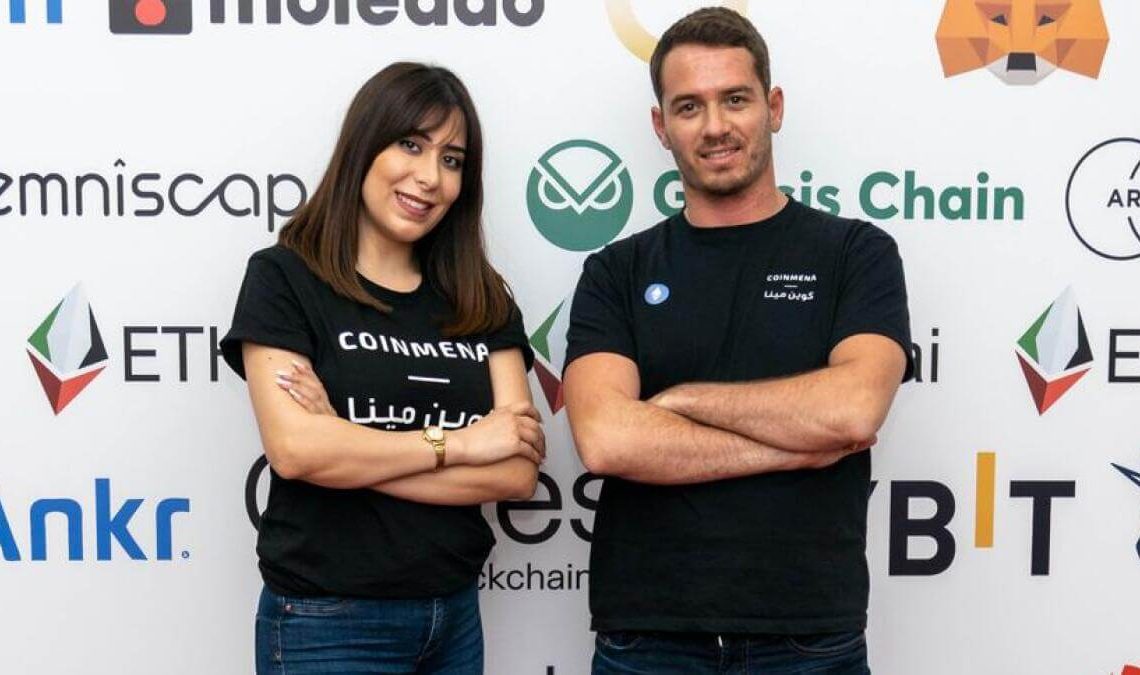
CoinMENA co-founders Dina Sam’an and Talal Tabbaa framed the issue directly. “We believe the industry’s future depends on strong banking, regulatory, and operational foundations, not just technology,” they said in a joint statement.
The comment points to a broader shift across crypto. Technology remains central, but market access increasingly depends on whether a firm can integrate with banks, meet compliance requirements, and provide customers with dependable fiat movement. As more regulated firms enter the UAE market, the quality of banking infrastructure may become one of the clearest markers of long-term competitiveness.
What Does Revolut’s UAE Progress Add To The Market?
The UAE’s fintech landscape is also set for further competition after the Central Bank of the UAE approved Revolut’s applications for Stored Value Facilities and Retail Payment Services licenses. The approvals move the London-headquartered fintech closer to launching services in the country.
Revolut reportedly plans to build out technology, operations, and local capabilities before making its services available. UAE customers are expected to gain access to multi-currency accounts, physical and virtual cards, and domestic and international transfers through the company’s app.
The move could increase competition in digital payments and cross-border money movement, areas that overlap with some of the same customer needs served by crypto platforms and stablecoin-based products. However, Revolut has not publicly confirmed whether its UAE offering will include digital asset trading, transfers, staking, or access to its crypto exchange product. The reported licenses cover stored-value and retail payment services rather than explicit authorization for virtual asset activities.
For the UAE market, the combined developments point in the same direction: digital finance is becoming more regulated, more bank-linked, and more competitive. CoinMENA’s agreement with Standard Chartered strengthens the crypto infrastructure side, while Revolut’s licensing progress adds pressure on payments and multi-currency services. The firms are not pursuing identical models, but both developments show that the next phase of UAE fintech growth will depend on regulated access, trusted settlement, and stronger links to the formal banking system.