
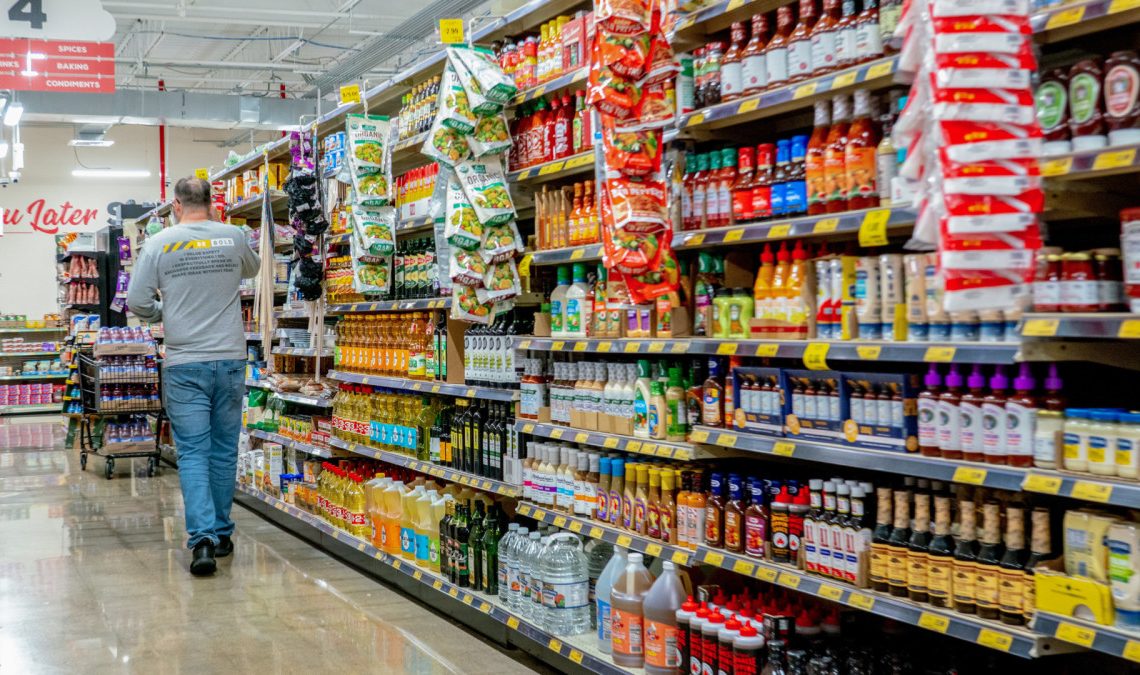
In recent years, grocery chains across the country have reevaluated operations as inflation, shifting consumer behavior, rising labor costs, and ongoing economic uncertainty have significantly impacted profitability. Those reassessments have led to widespread store closures and layoffs, leaving some communities with limited access to nearby grocery stores and essential goods.
While companies make difficult, sometimes surprising, decisions to protect their long-term financial health, closing underperforming locations can carry lasting consequences. Store shutdowns are common during economic downturns, but for many neighborhoods, the impact is far more damaging.
Now, one city is taking aggressive action to prevent lower-income areas from losing access to fresh food, and its response could become a model for other cities facing similar challenges.
Milwaukee hit by surge in grocery store closures
Since mid-2025, three major chains have shuttered locations across Milwaukee, not including numerous smaller local stores that have already closed or remain at risk.
Recent Milwaukee-area store closures
- Aldi: Closed its 5301 N. Hopkins St. location in January 2026 and plans to close its 1712 S. 108th St. store in spring 2026 (Source: The Street)
- Sentry Foods: Closed its 6350 W. Silver Spring Drive store in January 2026 after opening three years prior (Source: Milwaukee Journal Sentinel)
- Kroger-owned Pick ‘n Save: Closed five stores in Summer 2025 (Source: Milwaukee Journal Sentinel)
Kyle Grillot/Bloomberg via Getty Images
City officials launch emergency response
In response, Milwaukee Mayor Cavalier Johnson and city officials held a press conference at Sentry Foods on February 9, 2026, outlining a series of initiatives aimed at stabilizing food access.
As part of this plan, a $1 million grant program, funded by the Large Impact Development Fund (LID), will be launched to help grocers cover equipment and operational costs, with the goal of preventing additional shutdowns and keeping Milwaukee from falling victim to food insecurity.
“Grocery store closures continue to be a problem across the city, and we have been leveraging partnerships in order to stem the current wave of closures,” said Johnson at the press conference posted on WISN 12 News‘ YouTube channel.
City leaders are also drafting legislation that would require store operators to provide at least two months’ notice before closing a location.
“When large retailers leave without warning, neighborhoods pay the price,” said Milwaukee 1st District Alderwoman Andrea M. Pratt. “Access to fresh, affordable food is disappearing block by block. This is not the failure of individual families, it’s a systems issue, and it demands a public response.”
Officials acknowledge the proposal is not a long-term solution. Instead, it is designed as an immediate intervention while a task force develops more comprehensive strategies to address food access across the city.
The growing risk of food deserts
The U.S. Department of Agriculture (USDA) defines “low-access areas,” often called “food deserts,” as neighborhoods and communities with limited access to supermarkets, supercenters, grocery stores, or other sources of affordable, nutritious food.
Approximately 17.1 million people, or 5.6 percent of the U.S. population, live in low-income, low-access census tracts, meaning they live more than 1 mile or 20 miles from a supermarket, according to the USDA’s Food Access Research Atlas.
The official national poverty rate in 2024 was 10.6%, representing 35.9 million people, according to the U.S. Census Bureau.
Milwaukee’s poverty rate stands at about 22.8% as of 2024, according to the U.S. Census Bureau. This is significantly higher than the national average.
Health experts warn that residents of these areas may face higher risks of diet-related conditions, including obesity, diabetes, cardiovascular disease, and vitamin deficiencies.
“Effective interventions to increase healthy food accessibility may help improve diet quality and population health,” said American Cancer Society Senior Scientific Director Dr. Farhad Islami. “These may include initiatives establishing new healthy food retailers (e.g., farmers markets, grocery stores, bodegas, and mobile retailers), as well as upgrading the quality, diversity, and quantity of healthier foods at current stores.”
Retail headwinds extend beyond Milwaukee
Milwaukee-area grocery store closures reflect broader trends in the U.S. retail industry. Economic uncertainty, changing consumer habits, and ongoing trade pressures are forcing many retailers to downsize or consolidate their operations, contributing to a surge in closures and layoffs.
U.S. retailers are expected to close 7,900 stores in 2026, down 4.5% from 2025, while 5,500 stores are projected to open, up 4.4%, according to Coresight’s US Store Tracker 2026 Outlook.
More Store Closures:
- 61-year-old convenience chain closes store after costly experiment
- 113-year-old grocery chain quietly closes stores in 2026
- 90-year-old grocery chain confirms new round of store closures
Although closures are slowing slightly, the gap between openings and shutdowns remains significant, posing ongoing risks to lower-income communities.
“For consumers, the fallout means fewer choices, diminished access to in-person shopping, and, in some cases, higher prices due to reduced competition,” said Approved Funding President and Chief Lending Officer Shmuel Shayowitz.
Effects of long distances and poor transportation
Even when alternative grocery stores exist, transportation can be a major barrier.
Limited public transit options often force residents to travel long distances for essential groceries, which can be particularly challenging for lower-income households, elderly shoppers, and those without a vehicle.
“Enhancing transit availability and destination accessibility, particularly in northeastern, southern, smaller, or rural communities, could provide affordable mobility for essential needs like food,” said Preventing Chronic Disease Experts in the 2025 Public Transit Supports for Food Access Survey.
They added that prioritizing transit options for low-income residents and those with limited mobility could not only improve food access but also enhance diet quality and improve health outcomes, especially for communities disproportionately affected by chronic diseases or food insecurity.
Related: 159-year-old retail giant announces more store closures